Treatments · Gum treatment
Gum treatment
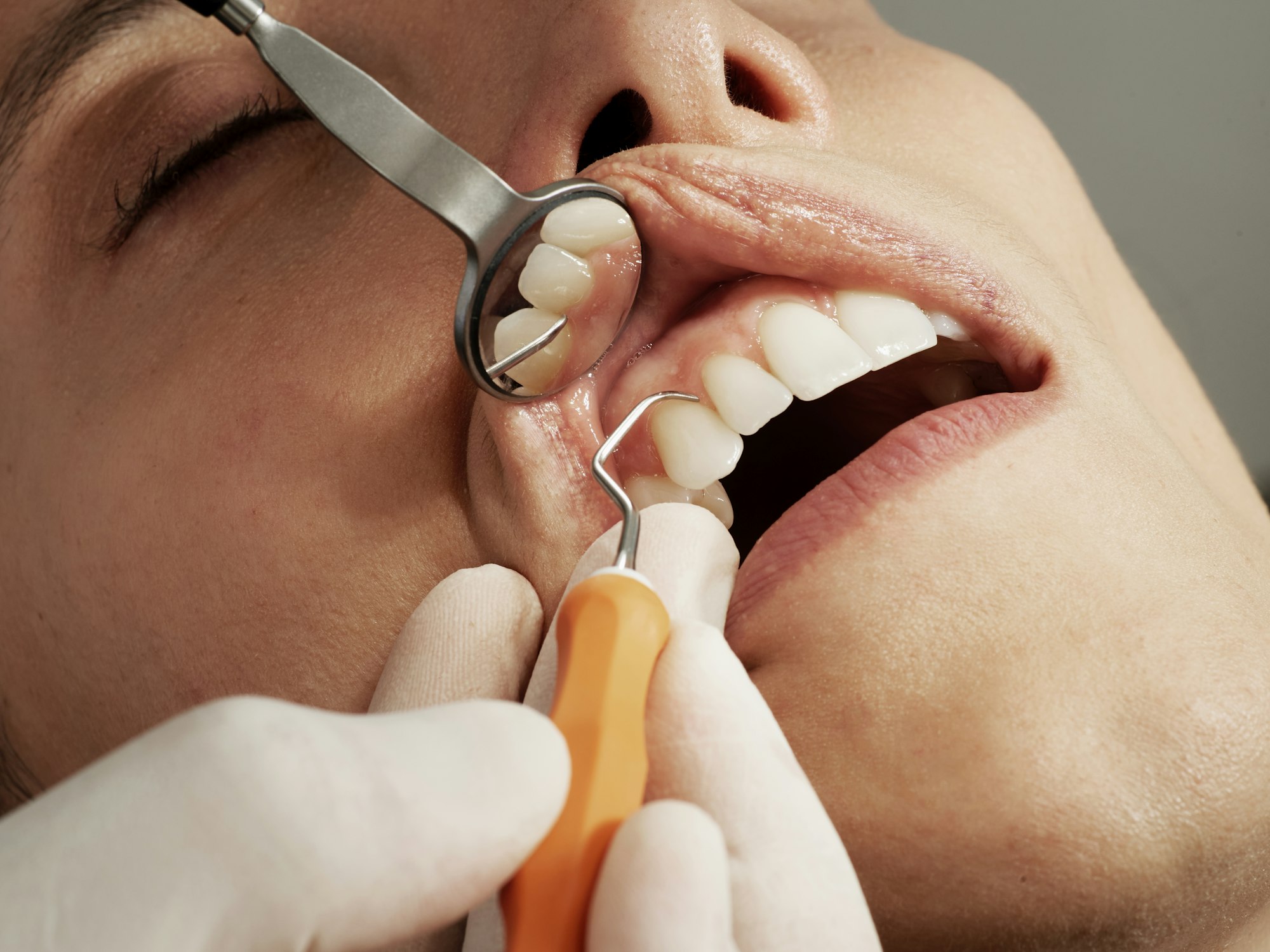
Periodontics treats diseases of the gums and the tissues supporting the teeth. Bleeding when brushing is the most common first sign of gum disease.
- Symptoms
- Bleeding, swelling, recession
- First step
- Professional cleaning
- Follow-up
- Check-ups every 3–6 months
What is this treatment?
Bacterial plaque and tartar on the tooth surface cause inflammation of the gums (gingivitis). If untreated, the inflammation can spread to the bone holding the teeth (periodontitis) and lead to loose teeth.
In the early stage, professional scaling and correct oral hygiene are often enough. In advanced cases, cleaning of the roots below the gum line and, if necessary, surgical treatment are planned.
Smoking, diabetes and some medicines can increase the risk of gum disease; it is important to share this information at the examination.
How does the treatment work?
- 01Examination and measurementGum pockets are measured and bone level is assessed with X-rays if needed.
- 02CleaningTartar and plaque are removed and oral hygiene techniques are shown.
- 03Deep cleaningIf needed, root surfaces below the gum line are cleaned under local anaesthesia.
- 04Follow-upHealing is checked and regular maintenance sessions are planned.
Frequently asked questions
No, healthy gums usually do not bleed. Bleeding is mostly a sign of inflammation and an examination is recommended.
No. Tooth enamel is not worn away during cleaning; temporary sensitivity may be felt after tartar is removed.
It does not grow back on its own. In suitable cases the receded area can be covered with gum grafts; the cause of the recession must be treated first.
This page is for information only. The treatment that suits you is determined by your dentist after an examination; durations vary from person to person.
Let’s review the right option for you at the examination.
Request an appointment